
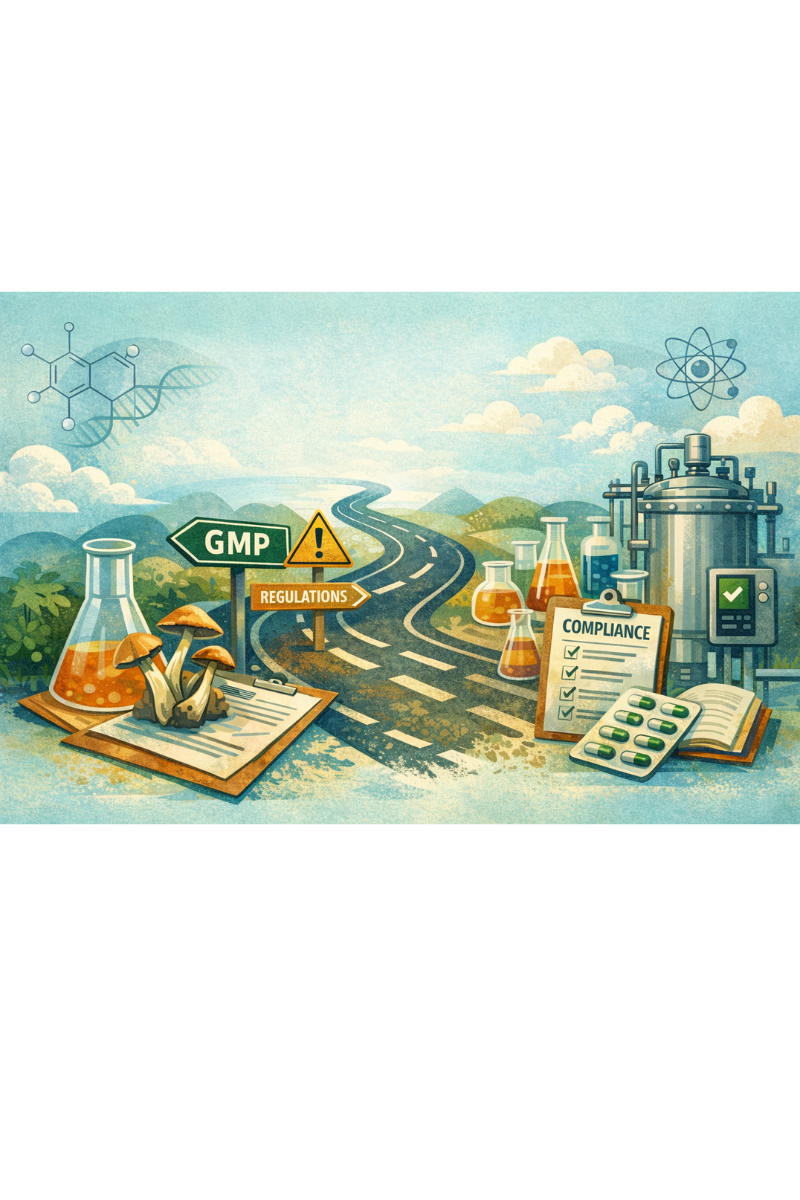
Navigating GMP Requirements in Psychedelic Drug Development
A practical guide to Good Manufacturing Practice compliance for organizations involved in psychedelic compound synthesis and formulation.

The regulatory landscape for psychedelic-assisted therapies has evolved significantly in recent years. As compounds like psilocybin and MDMA advance through clinical trials, understanding the FDA approval pathway has become essential for professionals entering this space.
Before any clinical trial can begin, sponsors must submit an Investigational New Drug (IND) application to the FDA. For psychedelic compounds, this process carries additional considerations due to their Schedule I classification. Researchers must obtain a DEA Schedule I researcher license and establish secure storage and handling protocols that meet federal requirements.
The IND application must include comprehensive preclinical data, a detailed investigational plan, and information about the manufacturing process. For psychedelic therapies, the FDA has increasingly requested data on the therapeutic model itself, not just the pharmacological compound.
The FDA's Breakthrough Therapy designation has accelerated timelines for several psychedelic compounds, reflecting the agency's recognition of unmet medical need in treatment-resistant conditions.

Phase I trials for psychedelic-assisted therapies typically focus on safety and dosing in healthy volunteers, though some protocols begin directly with patient populations. The unique nature of psychedelic experiences requires careful attention to set and setting variables, which the FDA now considers integral to the therapeutic intervention.
Phase II trials evaluate preliminary efficacy and further characterize safety. For psychedelic therapies, these studies have produced some of the most compelling results in psychiatry, with effect sizes that far exceed those of conventional antidepressants and anxiolytics.
Phase III pivotal trials must demonstrate substantial evidence of efficacy through adequate and well-controlled investigations. The FDA has worked closely with sponsors to develop appropriate trial designs that account for the challenges of blinding in psychedelic research.
Given the unique safety profile of psychedelic compounds, the FDA is expected to require Risk Evaluation and Mitigation Strategies (REMS) for approved products. These programs will likely mandate therapist certification, patient monitoring protocols, and restricted distribution channels.
 Regulatory frameworks are adapting to accommodate novel therapeutic modalities.
Understanding these regulatory requirements is crucial for anyone building a career in psychedelic medicine. Whether you are a clinician seeking certification, a researcher designing trials, or a professional navigating the business side, familiarity with the approval pathway will define success in this emerging field.
Beyond federal regulation, several states have introduced their own frameworks for psychedelic therapy access. Oregon's Psilocybin Services Act and Colorado's Natural Medicine Health Act represent pioneering state-level approaches that operate alongside, but independently of, the FDA pathway. Professionals working in this space must navigate both regulatory systems simultaneously.
As additional states consider similar legislation, the need for professionals who understand both federal and state regulatory requirements will only grow. This dual-track regulatory environment creates unique career opportunities for compliance specialists, policy analysts, and clinical administrators.
A practical guide to Good Manufacturing Practice compliance for organizations involved in psychedelic compound synthesis and formulation.